Skip Navigation
Students talking outside school

Anti-Bullying at LCS

At Littleover Community School, our approach to preventing and responding to bullying reflects The LCS Way and our values of Learning, Caring and Succeeding. We want everyone in our school community to feel safe, respected and valued.

Bullying is never tolerated at Littleover Community School.

We take reports of bullying seriously. Students and parents/carers should feel confident that concerns will be listened to, investigated and followed up, and that appropriate support will be provided.

WORRIED ABOUT BULLYING?

Tell someone. Students can report a concern to their Form Tutor, Head of Year, Assistant Head of Year, a senior member of staff, or any other adult in school they trust. If speaking face-to-face feels difficult, students can email their tutor, Head of Year or another member of staff.

Parents/carers should contact the school as soon as possible if they are concerned that their child is being bullied.

What do we mean by bullying?

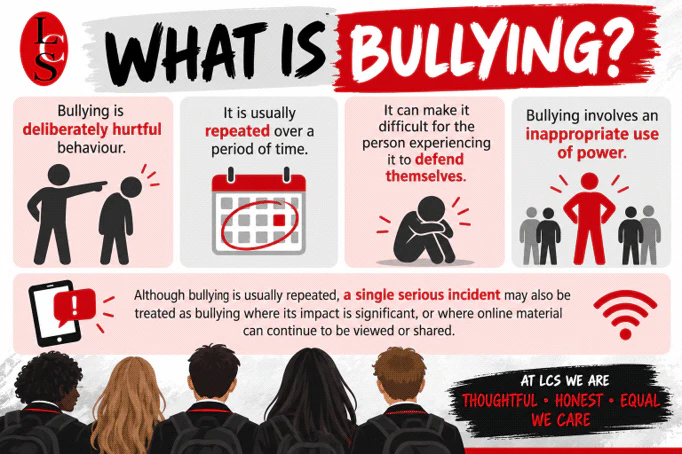
Bullying is deliberately hurtful behaviour which is usually repeated over a period of time and can make it difficult for the person experiencing it to defend themselves. Bullying involves inappropriate use of power. Although bullying is usually repeated, a single serious incident may also be treated as bullying where its impact is significant, or where online material can continue to be viewed or shared.

Sometimes comments begin as 'banter' between students or friends. If someone makes clear that the comments should stop and they continue, this may become bullying. One-off incidents which do not meet the definition of bullying can still be unacceptable and will be addressed appropriately.

Bullying can include:

Type

Examples

Verbal

Insults or language intended to cause upset or offence.

Physical

Pushing, kicking, hitting, punching, other violence, or taking belongings.

Psychological

Threats, name-calling or excluding individuals from group activities.

Prejudice-based

Behaviour referring to race, religion or belief, disability, sex, sexual orientation, gender reassignment, pregnancy and maternity, or other protected characteristics.

Sexual

Unwanted physical contact or sexually abusive comments.

Online

Using social media, messaging apps, gaming platforms, livestreaming services or other online platforms to bully others.

Emotional

Being unfriendly, deliberately excluding someone, tormenting them, hiding belongings or using threatening gestures.

Online bullying and behaviour outside school

Students are expected to follow the school's expectations regarding mobile phones and personal devices. Misuse of technology, including online bullying, will be investigated and addressed where it affects members of the school community. Students should also report relevant incidents that take place outside school, particularly where other LCS students are involved.

Students experiencing online bullying should keep evidence of messages, posts or other online material where possible and show this to a member of staff.

How we work to prevent bullying

Preventing bullying is part of our wider work to create a safe, respectful and inclusive school culture. At LCS we:

  • Promote The LCS Way and our values of Learning, Caring and Succeeding;

  • Teach about bullying, relationships and self-image through PSHE and related curriculum opportunities;

  • Teach about cyberbullying and safe online behaviour, including through Computing;

  • Regularly remind students to report concerns to members of staff;

  • Use assemblies, student surveys and the work of the School Council to raise awareness and listen to students;

  • Record incidents so that patterns and repeat concerns can be identified;

  • Review bullying information at senior leadership level to identify trends, vulnerable groups and areas where further preventative work is needed.

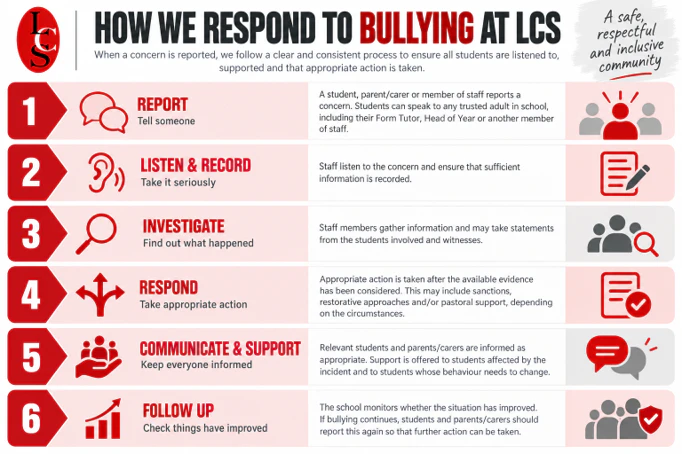
What happens when bullying is reported?

All reports of bullying should be taken seriously, and staff should not dismiss a student's concerns. The exact response will depend on the circumstances and evidence available, but the usual process is:

Action the school may take

Where bullying is established, the school's response will be proportionate to the circumstances and will follow the principles of the Inclusion, Relationships and Behaviour Policy. Disciplinary action is taken after the available evidence has been considered.

Depending on the circumstances, action may include:

  • Referral to the Form Tutor, Head of Year or senior leadership;

  • A verbal warning;

  • Contact or meetings with parents/carers;

  • Loss of free time at break or lunchtime;

  • Restorative work, where this is safe, proportionate and agreed by those involved;

  • After-school detention;

  • Extraction from lessons;

  • Time in Reflection;

  • Off-site direction (Respite);

  • Suspension;

  • Permanent exclusion in the most serious circumstances.

Support following bullying

Support will be offered as appropriate to students who have experienced bullying and to students responsible for bullying, with the aim of helping those affected and supporting positive changes in behaviour.

  • Form Tutors, Heads of Year, senior staff and other support staff can provide advice and support.

  • Pastoral Support Mentors and Well-Being Coaches may be involved.

  • Restorative work may be used where it is safe, proportionate and agreed by those involved.

  • Where appropriate, support may involve external agencies.

  • Some bullying may also constitute a safeguarding concern. Where appropriate, concerns will be managed in line with the school's Child Protection and Safeguarding Policy, and relevant agencies may be involved.

Advice for Students

Advice for Parents and Carers

How we monitor bullying

The school records and monitors bullying concerns so that we can identify patterns, repeat incidents and appropriate follow-up. Information considered includes who was involved, where and when incidents occurred, what happened, what action was taken and how the matter was followed up.

We also use student and parent/carer feedback, including surveys and ongoing communication. Senior leaders review bullying information to identify trends, vulnerable groups and areas requiring further preventative work.

Related Policies and Documents

Partners & Accreditations